< Back to the full list

Clinical immunology

Identification, characterisation and diagnosis: allergy

No items found.

Explore the molecular and clinical principles behind crucial allergy and anaphylaxis diagnostic techniques and how they impact patient diagnosis and prognosis. Connect these principles and utilise them in the context of a clinical case study to evaluate patient history, biochemistry and reach a diagnostic conclusion.

Learning outcomes

  • Recall the molecular and clinical principles of allergy and how these are measured.
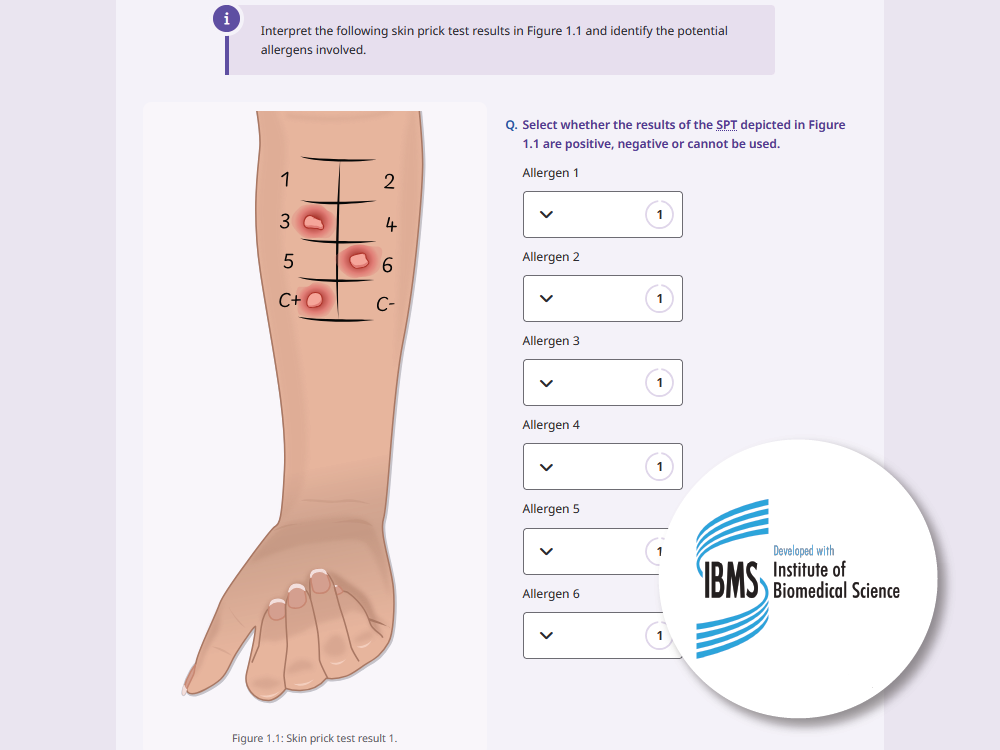
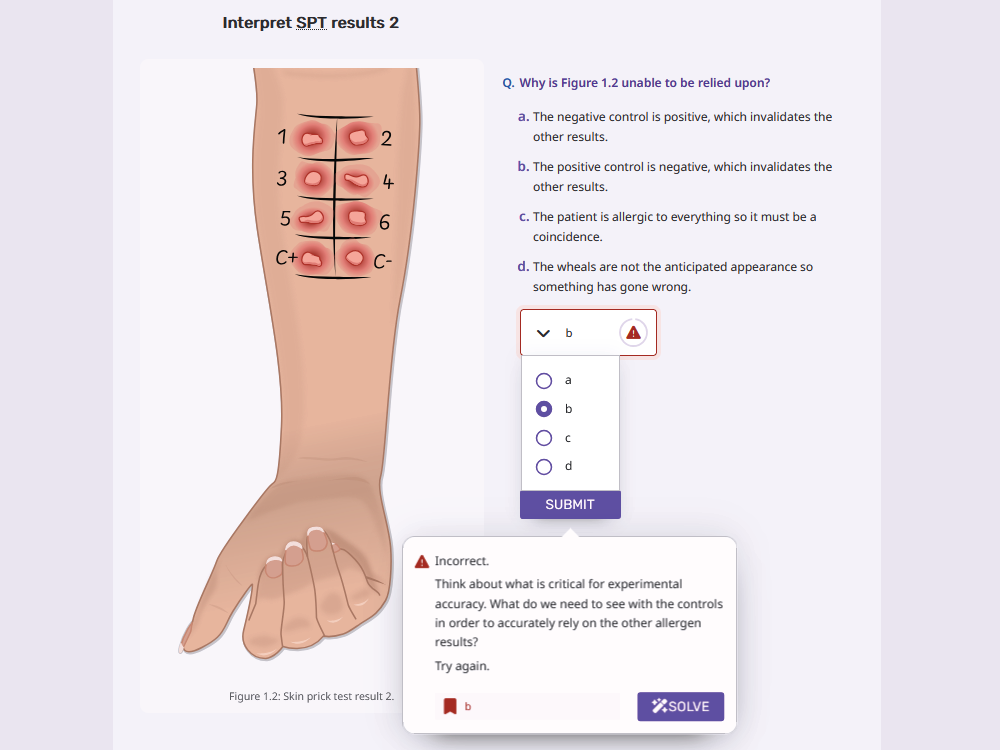
  • Interpret and appraise skin prick test results.
  • Recall the molecular and clinical principles of components and interpret clinical results.
  • Recall the molecular and clinical principles of IgE-mediated anaphylaxis and interpret clinical results.
  • Evaluate clinical history and biochemical results to reach a diagnostic conclusion.
No items found.
chevron_left
chevron_right

Skills

Manipulating and Presenting Data

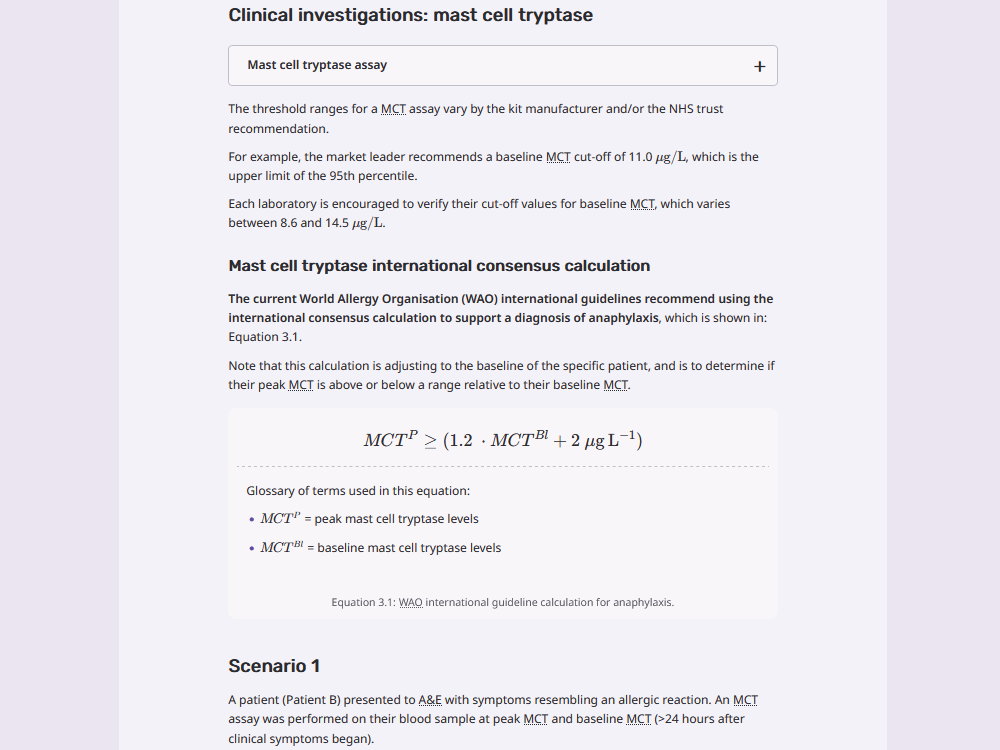
  • Calculate the consensus mast cell tryptase levels for various patients

Interpreting and Analysing Data

  • Interpret and appraise the results of skin prick tests, both qualitatively and quantitatively
  • Interpret clinical investigations surrounding component IgE responses
  • Interpret and evaluate clinical data including biomarkers and clinical history in order to formulate a justified diagnostic conclusion

Concepts, Principles and Theories

  • Recall the molecular and clinical principles of allergy and how they are measured in clinical practice
  • Recall the molecular and clinical principles underpinning component analysis and IgE-mediated anaphylaxis

Learn more about our approach to skills
Chelsie Coombes, HCPC Registered Specialist Biomedical Scientist, North Bristol NHS Trust

“These worksheets enable students to interact with real laboratory results and consider the testing pathways performed in NHS laboratories. They reflect current NHS pathology workflow that first provide the student with an understanding of the theory that underpins these investigations, followed by the opportunity to understand more about reflex testing and how this can be impacted by initial results obtained. By engaging with these interactive worksheets, students can develop their evidence-based decision-making skills and build upon the knowledge obtained from their respective course. The worksheets encourage students to work through the same forms of evidence interpretation and diagnostic reasoning expected within clinical laboratory environments, helping connect theoretical immunology with patient-focused investigation.”
Details

Subject areas

No items found.

Discipline

Clinical biomedical science

Topic

Clinical immunology

Purchase option

No items found.

Related products

No items found.

What are LabSims?

Our virtual lab simulations enhance student learning by building confidence in practical skills.
  • Enhance student skills and accelerate learning with multiple opportunities to practise
  • Boost confidence and competency with enhanced support and personalised feedback
  • Engage and motivate with enjoyable, challenging learning experiences
LabSim product page

What are Smart Worksheets?

Online, autograded assessment tool for advanced data analysis and calculation practice
  • Improve the student experience of assessment with immediate, targeted feedback
  • Save academic time by minimising repetitive marking for staff
  • Gain immediate insight into student progress with individual performance data
Smart Worksheets product page

Integrate with your LMS

Our products integrate with all major learning platforms, including Canvas, Blackboard, Moodle, Sakai and Brightspace or without any LMS using our LearnSci Direct Platform.
Learn more about LearnSci Direct.
No items found.
No items found.
No items found.
No items found.

See how our resources can enhance your student experiences

  • Try our resources for free
  • Get a live demonstration of our products
  • Become a partner and join our community
  • Talk to our team of experts
Request a demo
Image of a smiling student with a microscope