
Learnsci Teaching Innocvation Awards 2023 Previous winners
Winners & finalists
Winners




Finalists

Many students feel anxious when answering professional phone calls, yet confident telephone communication is a core skill for Biomedical Scientists working in NHS laboratories. This technology-supported teaching innovation transforms how students develop this capability by using immersive online simulation tools to create a safe, practice environment. Through platforms such as Interview360 and the Blackboard VLEs AI Role-play tool, students engage in simulated laboratory telephone scenarios, record their responses, reflect on their performance, and receive structured feedback. This approach removes the fear of “getting it wrong” while promoting professional language, clarity, and confidence. Pre- and post-activity surveys evaluate learning impact, with students reporting increased confidence, reduced anxiety, and a stronger sense of readiness for clinical placement. Student feedback highlights the value of being able to practise “without pressure,” describing the activity as realistic, supportive, and directly relevant to NHS laboratory work.
Many students feel anxious when answering professional phone calls, yet confident telephone communication is a core skill for Biomedical Scientists working in NHS laboratories. This technology-supported teaching innovation transforms how students develop this capability by using immersive online simulation tools to create a safe, practice environment. Through platforms such as Interview360 and the Blackboard VLEs AI Role-play tool, students engage in simulated laboratory telephone scenarios, record their responses, reflect on their performance, and receive structured feedback. This approach removes the fear of “getting it wrong” while promoting professional language, clarity, and confidence. Pre- and post-activity surveys evaluate learning impact, with students reporting increased confidence, reduced anxiety, and a stronger sense of readiness for clinical placement. Student feedback highlights the value of being able to practise “without pressure,” describing the activity as realistic, supportive, and directly relevant to NHS laboratory work.


We co-designed, developed and now deliver the MOOC, "AI Ethics, Inclusion & Society" with University of Glasgow intern students. The MOOC is an innovative, evidence-informed approach to embedding AI ethical and digital literacy through a flexible, accessible higher education approach. The fully asynchronous course enables learners to critically examine societal, ethical, and environmental implications of AI. Since its launch in May 2025, the MOOC has enrolled over 1,100 learners, generated 30,000+ completed learning steps, and sustained 1,900 discussion contributions, evidencing active and reflective participation. Learner feedback highlights impact and quality, with 90% of learners gaining new knowledge and skills. While freely available beyond the university, the MOOC has also been incorporated as a credit-bearing component in Year 2 Chemistry and Engineering, with students' reflections including, "100% recommend this course to everyone". The MOOC’s sustainable delivery model also enables ongoing iteration in this dynamic field.
We co-designed, developed and now deliver the MOOC, "AI Ethics, Inclusion & Society" with University of Glasgow intern students. The MOOC is an innovative, evidence-informed approach to embedding AI ethical and digital literacy through a flexible, accessible higher education approach. The fully asynchronous course enables learners to critically examine societal, ethical, and environmental implications of AI. Since its launch in May 2025, the MOOC has enrolled over 1,100 learners, generated 30,000+ completed learning steps, and sustained 1,900 discussion contributions, evidencing active and reflective participation. Learner feedback highlights impact and quality, with 90% of learners gaining new knowledge and skills. While freely available beyond the university, the MOOC has also been incorporated as a credit-bearing component in Year 2 Chemistry and Engineering, with students' reflections including, "100% recommend this course to everyone". The MOOC’s sustainable delivery model also enables ongoing iteration in this dynamic field.




By reframing pre-laboratory work as core, accountable learning activities and integrating Smart Worksheets, we increased student skills acquisition without increasing academics’ assessment load. Noting low completion rates for pre-laboratory exercises that corresponded to decreased in-laboratory learning, we set out to increase the quantity and quality of engagement in our first-year cohort. We mapped Smart Worksheets from the LearnSci Library to 26 of 35 distinct laboratory sessions spanning five degree programmes, providing point-of-need skills scaffolding at scale. Completion of these worksheets, alongside the pre-existing exercises, became a portion of students’ laboratory attendance, leveraging institutional compliance structures to produce behavioural change. Completion rates rose five-fold, and laboratory staff reported increased student confidence, preparedness, and competence. There was a significant increase in mean laboratory test marks over the pre-innovation cohort (65±11% to 72±10%; p<0.05). Higher grades correlated with increased engagement with both types of exercises (p<0.05), demonstrating the strength of this integrated approach.
By reframing pre-laboratory work as core, accountable learning activities and integrating Smart Worksheets, we increased student skills acquisition without increasing academics’ assessment load. Noting low completion rates for pre-laboratory exercises that corresponded to decreased in-laboratory learning, we set out to increase the quantity and quality of engagement in our first-year cohort. We mapped Smart Worksheets from the LearnSci Library to 26 of 35 distinct laboratory sessions spanning five degree programmes, providing point-of-need skills scaffolding at scale. Completion of these worksheets, alongside the pre-existing exercises, became a portion of students’ laboratory attendance, leveraging institutional compliance structures to produce behavioural change. Completion rates rose five-fold, and laboratory staff reported increased student confidence, preparedness, and competence. There was a significant increase in mean laboratory test marks over the pre-innovation cohort (65±11% to 72±10%; p<0.05). Higher grades correlated with increased engagement with both types of exercises (p<0.05), demonstrating the strength of this integrated approach.


Our project harnesses learning analytics and digital simulation tools to transform bioscience teaching by strengthening student confidence, enhancing engagement and promoting skills mastery. By embedding digital worksheets and LabSims as compulsory formative checkpoints, we gathered detailed analytics on student performance patterns, allowing us to identify and address concept-specific bottlenecks in real time. This evidence-informed approach shifted our practice from broad content review to precision scaffolding, resulting in measurable learning gains (10–21% adjustments in worksheet scores) and a 15.6% rise in student confidence in laboratory, analytical, and numeracy skills. Students also reported stronger uptake for practical preparation and self-revision. This innovation addresses engagement, skills acquisition, efficiency, and accessibility of digital learning analytics, offering a scalable model for inclusive, data-informed bioscience education practice.
Our project harnesses learning analytics and digital simulation tools to transform bioscience teaching by strengthening student confidence, enhancing engagement and promoting skills mastery. By embedding digital worksheets and LabSims as compulsory formative checkpoints, we gathered detailed analytics on student performance patterns, allowing us to identify and address concept-specific bottlenecks in real time. This evidence-informed approach shifted our practice from broad content review to precision scaffolding, resulting in measurable learning gains (10–21% adjustments in worksheet scores) and a 15.6% rise in student confidence in laboratory, analytical, and numeracy skills. Students also reported stronger uptake for practical preparation and self-revision. This innovation addresses engagement, skills acquisition, efficiency, and accessibility of digital learning analytics, offering a scalable model for inclusive, data-informed bioscience education practice.

I have implemented a Smart Worksheet as a summative assessment on a core first-year undergraduate Life Sciences module with an intake of over 400 students. The ability to allocate different datasets to different students addressed concerns around collusion. Automated marking and feedback relieved us of over 100 hours of marking time, saving around £1500 and freeing up teaching assistants to support active learning sessions instead. The consistency of marking offered by the Worksheet also relieved over 12 hours of academic time previously spent re-marking and clarifying feedback. The real-time feedback provided by the Smart Worksheet encourages students to review their work and consolidate their understanding during the assessment; we recorded a resulting increase in student performance. Detailed reports on per-problem student performance allow us to reflect on our teaching practices, identifying key areas of the curriculum in which to prioritise support in future years.
I have implemented a Smart Worksheet as a summative assessment on a core first-year undergraduate Life Sciences module with an intake of over 400 students. The ability to allocate different datasets to different students addressed concerns around collusion. Automated marking and feedback relieved us of over 100 hours of marking time, saving around £1500 and freeing up teaching assistants to support active learning sessions instead. The consistency of marking offered by the Worksheet also relieved over 12 hours of academic time previously spent re-marking and clarifying feedback. The real-time feedback provided by the Smart Worksheet encourages students to review their work and consolidate their understanding during the assessment; we recorded a resulting increase in student performance. Detailed reports on per-problem student performance allow us to reflect on our teaching practices, identifying key areas of the curriculum in which to prioritise support in future years.

The University of Edinburgh's Chemistry 2 course introduced custom LearnSci Smart Worksheets to help students develop data analysis skills in a physical chemistry laboratory setting. These worksheets allowed students to practise working with their own experimental data, used personalised questions, and incorporated qualitative discussions. An evaluation via anonymous survey was performed. The students responded positively to the worksheets, finding them clear, easy to use, helpful in reducing stress, and improved their understanding of chemistry concepts and calculations. The worksheets also helped students to connect theoretical ideas with practical experiments and made it easier for them to manage their workload. The majority thought that similar worksheets should be used more widely in practical chemistry courses, but alongside lab reports, as they helped to build confidence and skills in a supportive way. LearnSci Analytics allowed worksheet submissions to be analysed, meaning targeted interventions in areas where students needed extra help could be provided.
The University of Edinburgh's Chemistry 2 course introduced custom LearnSci Smart Worksheets to help students develop data analysis skills in a physical chemistry laboratory setting. These worksheets allowed students to practise working with their own experimental data, used personalised questions, and incorporated qualitative discussions. An evaluation via anonymous survey was performed. The students responded positively to the worksheets, finding them clear, easy to use, helpful in reducing stress, and improved their understanding of chemistry concepts and calculations. The worksheets also helped students to connect theoretical ideas with practical experiments and made it easier for them to manage their workload. The majority thought that similar worksheets should be used more widely in practical chemistry courses, but alongside lab reports, as they helped to build confidence and skills in a supportive way. LearnSci Analytics allowed worksheet submissions to be analysed, meaning targeted interventions in areas where students needed extra help could be provided.

Quantitative skills are essential in Biomedical Science, yet students enter HE with increasingly diverse educational backgrounds, confidence levels and external commitments. Developed in collaboration with the IBMS, this project implemented five interactive, asynchronous Smart Worksheets to enhance engagement and support quantitative skills acquisition across the BSc Biomedical Science programme. Designed to be flexible and accessible, the resources provide personalised practise in numeracy, units, formulae, data visualisation and statistics within authentic biomedical contexts. Instant feedback, unlimited attempts and assessment alignment promote active engagement and measurable learning gain. Evaluation showed strong impact among those who engaged: 74.6% reported increased confidence and 73% reported greater module engagement. Importantly, engagement data also revealed why students did not engage. Students in higher-risk year groups were working the most hours, challenging assumptions that final year students need less support. The Smart Worksheets therefore function as an inclusive learning intervention and a mechanism for understanding engagement.
Quantitative skills are essential in Biomedical Science, yet students enter HE with increasingly diverse educational backgrounds, confidence levels and external commitments. Developed in collaboration with the IBMS, this project implemented five interactive, asynchronous Smart Worksheets to enhance engagement and support quantitative skills acquisition across the BSc Biomedical Science programme. Designed to be flexible and accessible, the resources provide personalised practise in numeracy, units, formulae, data visualisation and statistics within authentic biomedical contexts. Instant feedback, unlimited attempts and assessment alignment promote active engagement and measurable learning gain. Evaluation showed strong impact among those who engaged: 74.6% reported increased confidence and 73% reported greater module engagement. Importantly, engagement data also revealed why students did not engage. Students in higher-risk year groups were working the most hours, challenging assumptions that final year students need less support. The Smart Worksheets therefore function as an inclusive learning intervention and a mechanism for understanding engagement.
More fantastic examples of teaching innovation

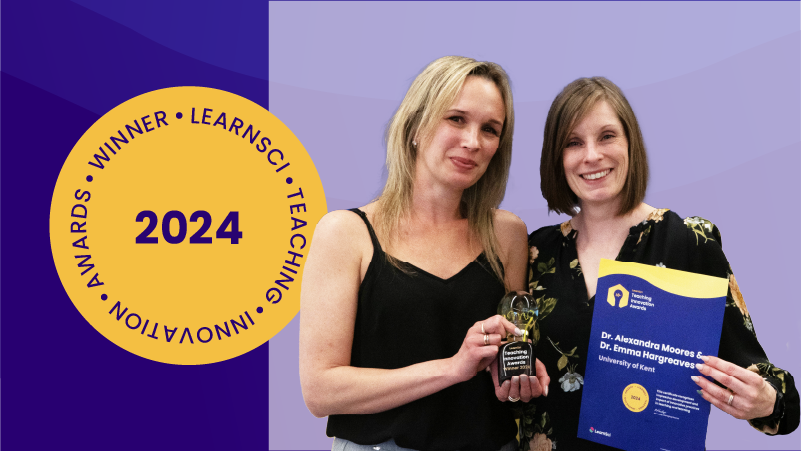
The 2024 Awards are focused on progression of previous Teaching Innovation Award applications.
Winners

Finalists


In 2021, we won our Teaching Innovation Award for implementing several of LearnSci’s Smart Worksheets that had been specifically customised for our students at LMU. We showed how introducing these worksheets contributed to eliminating attainment differentials, transforming the university experience for ethnic minority students and ameliorating degree awarding gaps. Since our win, we've continued to implement Smart Worksheets in analytical and physical chemistry modules and have introduced worksheets and simulations in first-year lab modules to better prepare students for practical work.
With funding from the RSC, we're continuing our partnership with LearnSci, focusing on using digital worksheets for mature student learners. These resources have significantly boosted pass rates (>90%), increased student engagement, and reduced the awarding gap (<10%), demonstrating the effectiveness of our approach. Student feedback has been invaluable, leading to adjustments that keep engagement high. We’ve added an interactive escape room practical to go alongside the unknown compound worksheet, enhancing teamwork and problem-solving skills. Alongside the Education for Social Justice and Careers Education Frameworks, the resources from LearnSci alongside industrial partner, Noclor, ensures student success and career readiness (BSc Chemistry average graduate outcomes for three years: 89%).
In 2021, we won our Teaching Innovation Award for implementing several of LearnSci’s Smart Worksheets that had been specifically customised for our students at LMU. We showed how introducing these worksheets contributed to eliminating attainment differentials, transforming the university experience for ethnic minority students and ameliorating degree awarding gaps. Since our win, we've continued to implement Smart Worksheets in analytical and physical chemistry modules and have introduced worksheets and simulations in first-year lab modules to better prepare students for practical work.
With funding from the RSC, we're continuing our partnership with LearnSci, focusing on using digital worksheets for mature student learners. These resources have significantly boosted pass rates (>90%), increased student engagement, and reduced the awarding gap (<10%), demonstrating the effectiveness of our approach. Student feedback has been invaluable, leading to adjustments that keep engagement high. We’ve added an interactive escape room practical to go alongside the unknown compound worksheet, enhancing teamwork and problem-solving skills. Alongside the Education for Social Justice and Careers Education Frameworks, the resources from LearnSci alongside industrial partner, Noclor, ensures student success and career readiness (BSc Chemistry average graduate outcomes for three years: 89%).


We are passionate about supporting the student learning experience, seeking to understand and address barriers within the chemistry lab environment, whilst aiming to reduce anxiety and improve confidence through the creation of interactive e-resources.
We identified several key issues that impact negatively on students transitioning into a laboratory environment, which led to the building of an online resource providing a virtual immersion in an undergraduate organic synthesis lab, available to students before they entered the laboratory. The virtual resource introduces students to the laboratory environment, the equipment and chemicals they will be using, and the various health and safety requirements of the practical.
Our research is yielding exciting new results and the University of Glasgow has awarded us funding, through a competitive scheme, to extend this work. We are now leading an e-resource creation focused on lab safety which will span all undergraduate laboratories, thus providing consistent guidance and training for all our chemistry students and staff. Uniquely, we have included our technical staff at the heart of this project to platform their expertise.
We are passionate about supporting the student learning experience, seeking to understand and address barriers within the chemistry lab environment, whilst aiming to reduce anxiety and improve confidence through the creation of interactive e-resources.
We identified several key issues that impact negatively on students transitioning into a laboratory environment, which led to the building of an online resource providing a virtual immersion in an undergraduate organic synthesis lab, available to students before they entered the laboratory. The virtual resource introduces students to the laboratory environment, the equipment and chemicals they will be using, and the various health and safety requirements of the practical.
Our research is yielding exciting new results and the University of Glasgow has awarded us funding, through a competitive scheme, to extend this work. We are now leading an e-resource creation focused on lab safety which will span all undergraduate laboratories, thus providing consistent guidance and training for all our chemistry students and staff. Uniquely, we have included our technical staff at the heart of this project to platform their expertise.


Our genetics Smart Worksheet was designed to support our undergraduates in learning and practising fundamental statistical analysis skills and principles, while also building their confidence in a summative assessment.
Students’ feedback suggests it has assisted in overcoming their “mathematical hesitancy” and promoted their confidence in statistical analysis of bioscience data. Subsequent feedback from academics teaching other courses also suggests these students are now applying their newly acquired statistical skills with confidence in other modules classes too.
This success has opened the possibility of a significant change in the teaching of statistics across the Medical School. A case has been made for students to learn the principles of statistics and perform the tests themselves, rather than rely on automated software.
The Smart Worksheet has also since been adapted to a formative assessment for our Masters programme, to address attainment gaps. This was the only approach to successfully identify students requiring early intervention and support, and all students surveyed agreed it improved their confidence and statistics skills.
Our genetics Smart Worksheet was designed to support our undergraduates in learning and practising fundamental statistical analysis skills and principles, while also building their confidence in a summative assessment.
Students’ feedback suggests it has assisted in overcoming their “mathematical hesitancy” and promoted their confidence in statistical analysis of bioscience data. Subsequent feedback from academics teaching other courses also suggests these students are now applying their newly acquired statistical skills with confidence in other modules classes too.
This success has opened the possibility of a significant change in the teaching of statistics across the Medical School. A case has been made for students to learn the principles of statistics and perform the tests themselves, rather than rely on automated software.
The Smart Worksheet has also since been adapted to a formative assessment for our Masters programme, to address attainment gaps. This was the only approach to successfully identify students requiring early intervention and support, and all students surveyed agreed it improved their confidence and statistics skills.
Winners


Finalists
Reality Bites is an immersive storytelling learning resource aiming to revolutionise nutrition education through Virtual Reality (VR). Combining VR with self-directed virtual journeys, students explore the human digestive system in an engaging narrative, transforming the traditional provision of dense, fact-based physiology content, into an interactive, student-centred experience. Spearheaded by a student-led development process, Reality Bites leverages cross-disciplinary expertise. Nutrition students created storyboards and computer science students converted them into VR scenarios. This collaboration resulted in a tool that nurtures highly sought skills like digital literacy and teamwork, whilst also being universally endorsed by students and nutrition experts as a engaging, memorable, and effective educational experience. Reality Bites not only augments science education at RMIT University but will broaden its educational impact through novel VR development frameworks and cross-institutional resource sharing. It signals a new era of digital learning that emphasises active engagement and creative innovations in higher education.
Reality Bites is an immersive storytelling learning resource aiming to revolutionise nutrition education through Virtual Reality (VR). Combining VR with self-directed virtual journeys, students explore the human digestive system in an engaging narrative, transforming the traditional provision of dense, fact-based physiology content, into an interactive, student-centred experience. Spearheaded by a student-led development process, Reality Bites leverages cross-disciplinary expertise. Nutrition students created storyboards and computer science students converted them into VR scenarios. This collaboration resulted in a tool that nurtures highly sought skills like digital literacy and teamwork, whilst also being universally endorsed by students and nutrition experts as a engaging, memorable, and effective educational experience. Reality Bites not only augments science education at RMIT University but will broaden its educational impact through novel VR development frameworks and cross-institutional resource sharing. It signals a new era of digital learning that emphasises active engagement and creative innovations in higher education.
#RemoteForensicCSI is a global science community with a membership from five continents, initiated by three National Teacher Fellows in a tri-institutional collaboration, during the Covid-19 pandemic. It was recognised that there was an evident science knowledge gap for academics (HE and FE) and professional trainers in the applied science remit of Criminal Justice education, with the rapid transition to online learning and the urgent requirements for relevant e-resources. #RemoteForensicCSI is distinctive in that it has innovated teaching and learning around the world, in three mechanisms: 1) in providing tools and methods in response to the pandemic challenge, 2) improving teaching materials and practices and 3) developing new digital learning resources. Additionally, this international community of practice provides peer support and continual professional development opportunities, which has translated to the wider science sector as an exemplar in innovative education.
#RemoteForensicCSI is a global science community with a membership from five continents, initiated by three National Teacher Fellows in a tri-institutional collaboration, during the Covid-19 pandemic. It was recognised that there was an evident science knowledge gap for academics (HE and FE) and professional trainers in the applied science remit of Criminal Justice education, with the rapid transition to online learning and the urgent requirements for relevant e-resources. #RemoteForensicCSI is distinctive in that it has innovated teaching and learning around the world, in three mechanisms: 1) in providing tools and methods in response to the pandemic challenge, 2) improving teaching materials and practices and 3) developing new digital learning resources. Additionally, this international community of practice provides peer support and continual professional development opportunities, which has translated to the wider science sector as an exemplar in innovative education.
Supporting students transitioning into Higher Education (HE) is vital for wellbeing and retention. While all students require transition support, groups underrepresented in HE are likely to benefit most. We worked with current students from underrepresented groups in HE from the University of East Anglia (UEA) School of Biological Sciences (BIO) to identify what would be useful for new students to experience ahead of starting university based on their own experiences and a cohort-wide survey. Our student interns co-created content for our resulting ‘Preparing for your Biology Studies’ module: a non-credit bearing Blackboard module developed for BIO Foundation and First Year students which includes innovative use of digital tools to support science education. Commencing two weeks before students’ campus arrival, continuing into Welcome Week, with occasional content released through the year, it focuses on supporting learning, studying and transition into HE. Making no assumptions about student prior knowledge, background or experiences, content should be particularly valuable to students underrepresented in HE, as project leads worked with current students from these groups to help identify content areas and co-design some resources. Institutional impact is demonstrated through other UEA schools adopting the resource.
Supporting students transitioning into Higher Education (HE) is vital for wellbeing and retention. While all students require transition support, groups underrepresented in HE are likely to benefit most. We worked with current students from underrepresented groups in HE from the University of East Anglia (UEA) School of Biological Sciences (BIO) to identify what would be useful for new students to experience ahead of starting university based on their own experiences and a cohort-wide survey. Our student interns co-created content for our resulting ‘Preparing for your Biology Studies’ module: a non-credit bearing Blackboard module developed for BIO Foundation and First Year students which includes innovative use of digital tools to support science education. Commencing two weeks before students’ campus arrival, continuing into Welcome Week, with occasional content released through the year, it focuses on supporting learning, studying and transition into HE. Making no assumptions about student prior knowledge, background or experiences, content should be particularly valuable to students underrepresented in HE, as project leads worked with current students from these groups to help identify content areas and co-design some resources. Institutional impact is demonstrated through other UEA schools adopting the resource.
The BSc (Hons) Biomedical Sciences (BMS) programme at Newcastle University Medicine Malaysia (NUMed) and Newcastle University U.K. (NCL) aim to equip students with key practical and professional research skills for their future career path. Commencing AY 20-21, to support student learning during the Covid-19 pandemic, a suite of linked online resources was introduced to support BMS laboratory practicals, including in-house videos of laboratory techniques, example data and LearnSci LabSims. In response to positive student feedback, the online resources were subsequently retained to support physical laboratory classes.
Student surveys confirmed both NCL and NUMed students used LabSims and other online resources to aid preparation for physical laboratory practicals, but indicated more frequent usage by NUMed students, and enhanced usage by students across both campuses who were less confident in their physical practical ability.
To provide deeper qualitative data on student perceptions on the expediency of supporting online resources and their overall practical and professional skills development, we propose to run focus groups at both campuses as the same cohorts commence Year 2 in AY 24-25 . We propose to use findings from this study to redevelop and further evaluate the online resources supporting NUMed/NCL practical skills modules in the BMS programme.
The BSc (Hons) Biomedical Sciences (BMS) programme at Newcastle University Medicine Malaysia (NUMed) and Newcastle University U.K. (NCL) aim to equip students with key practical and professional research skills for their future career path. Commencing AY 20-21, to support student learning during the Covid-19 pandemic, a suite of linked online resources was introduced to support BMS laboratory practicals, including in-house videos of laboratory techniques, example data and LearnSci LabSims. In response to positive student feedback, the online resources were subsequently retained to support physical laboratory classes.
Student surveys confirmed both NCL and NUMed students used LabSims and other online resources to aid preparation for physical laboratory practicals, but indicated more frequent usage by NUMed students, and enhanced usage by students across both campuses who were less confident in their physical practical ability.
To provide deeper qualitative data on student perceptions on the expediency of supporting online resources and their overall practical and professional skills development, we propose to run focus groups at both campuses as the same cohorts commence Year 2 in AY 24-25 . We propose to use findings from this study to redevelop and further evaluate the online resources supporting NUMed/NCL practical skills modules in the BMS programme.
Module MD4010 Professional Skills for Life Sciences I, at the University of Chester, aims to introduce and develop skills relevant to life science students, including the development of practical and data analysis skills. The previous module assessment faced challenges which included: lack of structure leading to students feeling overwhelmed, inconsistencies in feedback and delayed release of provisional marks/feedback due to increased student numbers, and staff workload. To address these issues, an innovative summative assessment Smart Worksheet was implemented into the module. Part A consists of a number of tasks allowing microscopy and scientific drawing skills to be assessed outside of the laboratory. The module leader provided microscopy images and scientific drawings which were digitally transformed by LearnSci, to ensure a distinctive set for each student. Instant feedback opportunities allowed for immediate skill development and adjustment. Part B involves step-wise calculations, breaking down calculations into manageable steps. Early evaluation of the impact reveals improved student achievement (average mark increased from 77% (2022/23) to 85% (2023/24), with 92% of students achieving a mark exceeding 70% (2023/24)), enhanced student learning, elimination of academic conduct issues and enhanced student satisfaction and staff wellbeing.
Module MD4010 Professional Skills for Life Sciences I, at the University of Chester, aims to introduce and develop skills relevant to life science students, including the development of practical and data analysis skills. The previous module assessment faced challenges which included: lack of structure leading to students feeling overwhelmed, inconsistencies in feedback and delayed release of provisional marks/feedback due to increased student numbers, and staff workload. To address these issues, an innovative summative assessment Smart Worksheet was implemented into the module. Part A consists of a number of tasks allowing microscopy and scientific drawing skills to be assessed outside of the laboratory. The module leader provided microscopy images and scientific drawings which were digitally transformed by LearnSci, to ensure a distinctive set for each student. Instant feedback opportunities allowed for immediate skill development and adjustment. Part B involves step-wise calculations, breaking down calculations into manageable steps. Early evaluation of the impact reveals improved student achievement (average mark increased from 77% (2022/23) to 85% (2023/24), with 92% of students achieving a mark exceeding 70% (2023/24)), enhanced student learning, elimination of academic conduct issues and enhanced student satisfaction and staff wellbeing.
At the University of Surrey, an early intervention framework has been designed and implemented to support students’ mathematical development in the transition to undergraduate Science, Technology, Engineering and Mathematics degree programmes. Based on our Virtual Learning Environment, the framework facilitates a process of pre-entry preparation and self-evaluation for new students. Students who find mathematics challenging are identified and referred to focused in-semester tutorial sessions from the semester outset. Their progress can be monitored through engagement with further online diagnostics. The diagnostic process is primarily delivered digitally but the emphasis shifts toward more focused individual support in the intervention stage, where students can attend focused additional tutorials. The stages of the process are summarised as follows; (1) complete initial review questions (2) identify areas for improvement and review specific learning objectives (3) complete departmental diagnostic quiz (4) attend additional tutorial sessions. Stages (1)-(3) are completed prior to course commencement. Around 600 students (90% of our new intake in the Faculty of Engineering and Physical Sciences) voluntarily engage with the pre-entry initial review and diagnostics process each year. Performance data from the framework and feedback from students indicates that the process has a positive impact in three important areas; (1) enhancing performance/development (2) student experience (3) perceived level of mathematical preparedness – typically this improves by 14% after initial diagnostic process.
At the University of Surrey, an early intervention framework has been designed and implemented to support students’ mathematical development in the transition to undergraduate Science, Technology, Engineering and Mathematics degree programmes. Based on our Virtual Learning Environment, the framework facilitates a process of pre-entry preparation and self-evaluation for new students. Students who find mathematics challenging are identified and referred to focused in-semester tutorial sessions from the semester outset. Their progress can be monitored through engagement with further online diagnostics. The diagnostic process is primarily delivered digitally but the emphasis shifts toward more focused individual support in the intervention stage, where students can attend focused additional tutorials. The stages of the process are summarised as follows; (1) complete initial review questions (2) identify areas for improvement and review specific learning objectives (3) complete departmental diagnostic quiz (4) attend additional tutorial sessions. Stages (1)-(3) are completed prior to course commencement. Around 600 students (90% of our new intake in the Faculty of Engineering and Physical Sciences) voluntarily engage with the pre-entry initial review and diagnostics process each year. Performance data from the framework and feedback from students indicates that the process has a positive impact in three important areas; (1) enhancing performance/development (2) student experience (3) perceived level of mathematical preparedness – typically this improves by 14% after initial diagnostic process.
The HIVE Digital Education and Teaching Innovation Unit has pioneered a number of e-learning resources, digital tools and innovative teaching practices that have significantly enhanced the student learning experience. They have created immersive virtual patient cases and scenarios that enable undergraduate medical students to reinforce their understanding of the basic science underpinning medicine, whilst enhancing their clinical reasoning skills by engaging with interactive e-resources. These e-resources cover specialties such as cardiology, neurology and psychiatry amongst others. In total, the unit has in excess of 140 e-learning resources within their repository and are creating an e-learning series (Medic-8) that will be made available to medical students around the world within the next few months. The unit is also currently creating truly immersive learning resources using VR and AR. These include virtual hospital wards as well as virtual laboratories. HIVE boasts a number of partnerships and collaborations with international higher education providers.
The HIVE Digital Education and Teaching Innovation Unit has pioneered a number of e-learning resources, digital tools and innovative teaching practices that have significantly enhanced the student learning experience. They have created immersive virtual patient cases and scenarios that enable undergraduate medical students to reinforce their understanding of the basic science underpinning medicine, whilst enhancing their clinical reasoning skills by engaging with interactive e-resources. These e-resources cover specialties such as cardiology, neurology and psychiatry amongst others. In total, the unit has in excess of 140 e-learning resources within their repository and are creating an e-learning series (Medic-8) that will be made available to medical students around the world within the next few months. The unit is also currently creating truly immersive learning resources using VR and AR. These include virtual hospital wards as well as virtual laboratories. HIVE boasts a number of partnerships and collaborations with international higher education providers.
More fantastic examples of teaching innovation

Winners


Finalists
Productville is a set of teaching resources, focusing on five real-world pharmaceutical products (Zovirax [cream], Diprivan [emulsion], and Sudafed, Anzatax and Phenobarbitone [solutions]) – to illustrate many difficult-to-understand scientific concepts, such as partitioning and solubility. The products contextualise scientific concepts through familiarity by using stories and experiences students can relate to. They illustrate various pharmaceutical forms (solutions, emulsions, and creams), relevant physico-chemical properties, and diverse medical conditions or needs, and were incorporated into all phases of learning including case studies, lectures, workshops, and assessments.
Productville is a set of teaching resources, focusing on five real-world pharmaceutical products (Zovirax [cream], Diprivan [emulsion], and Sudafed, Anzatax and Phenobarbitone [solutions]) – to illustrate many difficult-to-understand scientific concepts, such as partitioning and solubility. The products contextualise scientific concepts through familiarity by using stories and experiences students can relate to. They illustrate various pharmaceutical forms (solutions, emulsions, and creams), relevant physico-chemical properties, and diverse medical conditions or needs, and were incorporated into all phases of learning including case studies, lectures, workshops, and assessments.
Chirality-2 is a free game for iOS and Android and one of the first mobile apps developed to help students learn chemistry. Downloaded almost 30,000 times in over 30 countries since release, it has been independently proven to improve students’ skills and attitude in chemistry. Chirality-2 was designed by academics but built with students, for students. The aim was to produce an innovative digital tool to enhance student learning and make it more enjoyable. The app has positively impacted teaching quality worldwide for five years and aims to continue to do so.
Chirality-2 is a free game for iOS and Android and one of the first mobile apps developed to help students learn chemistry. Downloaded almost 30,000 times in over 30 countries since release, it has been independently proven to improve students’ skills and attitude in chemistry. Chirality-2 was designed by academics but built with students, for students. The aim was to produce an innovative digital tool to enhance student learning and make it more enjoyable. The app has positively impacted teaching quality worldwide for five years and aims to continue to do so.
The WorldSkillsUK laboratory technician annual competition leads diverse applicants on a progressive development of applied practical skills within the discipline. Participants are from across the UK in early stages of educational or apprenticeship routes within Chemical, Biomedical or Biology fields. LearnSci resources are included online to cater to this diversity, offering familiarisation to new techniques and practice of core skills prior to regional laboratory-based tasks. This platform demonstrably broadens participation and enhances inclusivity for applicants by allowing students of varied backgrounds and disciplines to succeed. Linked quiz-based assessment further generates engagement metrics and a selection process that correlates well with subsequent practical performance. The resources encompass skills and knowledge beyond practical techniques, further supporting the employability skills focus throughout. This is a continued resource for training towards the national and international levels of WorldSkills, developing expertise and good laboratory practice in laboratory skills working effectively alongside practical experience.
The WorldSkillsUK laboratory technician annual competition leads diverse applicants on a progressive development of applied practical skills within the discipline. Participants are from across the UK in early stages of educational or apprenticeship routes within Chemical, Biomedical or Biology fields. LearnSci resources are included online to cater to this diversity, offering familiarisation to new techniques and practice of core skills prior to regional laboratory-based tasks. This platform demonstrably broadens participation and enhances inclusivity for applicants by allowing students of varied backgrounds and disciplines to succeed. Linked quiz-based assessment further generates engagement metrics and a selection process that correlates well with subsequent practical performance. The resources encompass skills and knowledge beyond practical techniques, further supporting the employability skills focus throughout. This is a continued resource for training towards the national and international levels of WorldSkills, developing expertise and good laboratory practice in laboratory skills working effectively alongside practical experience.

The aim was to increase student engagement and motivation using online materials before, during and after lab practicals, and hence increase first-time pass marks. LabSims and Smart Worksheets were implemented into teaching across a variety of Level 4 and 5 modules. Students received timely feedback and were able to practise to improve their future summative work, whilst staff wellbeing was supported with reduced marking loads. The overall average student mark increased and overall fails decreased significantly.
The aim was to increase student engagement and motivation using online materials before, during and after lab practicals, and hence increase first-time pass marks. LabSims and Smart Worksheets were implemented into teaching across a variety of Level 4 and 5 modules. Students received timely feedback and were able to practise to improve their future summative work, whilst staff wellbeing was supported with reduced marking loads. The overall average student mark increased and overall fails decreased significantly.

Pairs of practicals and supporting Smart Worksheets were developed to support foundation year students who feed into programmes across the faculty. In each pair, the first experiment was supported by a Smart Worksheet with all the feedback available at each step and the final mark was formative. The second experiment was like the first (different chemistry) but the worksheet had no feedback and the final mark was summative. This “formative first” method allows students to practice lab techniques (the worksheets give marks / feedback for raw data accuracy), subsequent calculations (with feedback on which steps are incorrect and why) and experience of the worksheets before the assessed practical. Analysis of the submissions of over 600 students show that those who complete formative assessments have an average mark from the summative assessments that is 10% higher than those who do not.
Pairs of practicals and supporting Smart Worksheets were developed to support foundation year students who feed into programmes across the faculty. In each pair, the first experiment was supported by a Smart Worksheet with all the feedback available at each step and the final mark was formative. The second experiment was like the first (different chemistry) but the worksheet had no feedback and the final mark was summative. This “formative first” method allows students to practice lab techniques (the worksheets give marks / feedback for raw data accuracy), subsequent calculations (with feedback on which steps are incorrect and why) and experience of the worksheets before the assessed practical. Analysis of the submissions of over 600 students show that those who complete formative assessments have an average mark from the summative assessments that is 10% higher than those who do not.
More fantastic examples of teaching innovation
Winners


Finalists

Postgraduate research skills training and in-person lab practice are integral to doctoral training programmes. The impossibility of accessing lab facilities during the COVID-19 pandemic, and the reopening of these labs with restrictions, meant most research training could not be provided in person. This took a serious toll on postgraduate research student (PGR) motivation, undermining their self-confidence in lab practice.
To solve this problem, the School of Pharmacy developed two learning resources - “PGR Biosciences Lab Shots” and “PGR Chemistry Lab Shots” – using LearnSci LabSims. Accessible everywhere, these resources allowed students to safely prepare for the lab and regain confidence.
900 LearnSci activities were undertaken in the first nine months of implementation among a community of 179 PGRs. The impact of this work has been recognised across Schools of the University. After sharing their impact in the Academic Community of Practice run by the Faculty of Science Digital Learning Team, other Schools expressed an interest in adopting the resources.
Postgraduate research skills training and in-person lab practice are integral to doctoral training programmes. The impossibility of accessing lab facilities during the COVID-19 pandemic, and the reopening of these labs with restrictions, meant most research training could not be provided in person. This took a serious toll on postgraduate research student (PGR) motivation, undermining their self-confidence in lab practice.
To solve this problem, the School of Pharmacy developed two learning resources - “PGR Biosciences Lab Shots” and “PGR Chemistry Lab Shots” – using LearnSci LabSims. Accessible everywhere, these resources allowed students to safely prepare for the lab and regain confidence.
900 LearnSci activities were undertaken in the first nine months of implementation among a community of 179 PGRs. The impact of this work has been recognised across Schools of the University. After sharing their impact in the Academic Community of Practice run by the Faculty of Science Digital Learning Team, other Schools expressed an interest in adopting the resources.

Pre-COVID-19, students collected data in the lab and processed it in a follow-up session using a Smart Worksheet. Assessment took the form of an end-of-module exam, where calculations were carried out using previously unseen data. With the shift to online learning, this exam changed to an open book, non-vigilated 24-hour format. High-stakes, time-pressured online assessments are an ideal environment for student collusion, and the previous exam, with a single correct answer, was especially high risk for students checking answers with each other or working collaboratively. The Smart Worksheet continued to be a valuable tool even with no student-collected lab data. Historical datasets were provided which enabled the students to complete the formative work. For the end-of-module assessment, students downloaded the exam paper and their unique dataset, generated by an R script. All students used the correct dataset and there was no evidence of collusion. Alongside the students’ datasets, the R script generated an answer file for the marker containing all answers and workings, including plotted data. Student performance showed no statistical difference to the previous two years, despite students having access to their notes and the internet, and less time pressure. The mean and median marks for the data section of the exam remained the same as the previous two years.
Pre-COVID-19, students collected data in the lab and processed it in a follow-up session using a Smart Worksheet. Assessment took the form of an end-of-module exam, where calculations were carried out using previously unseen data. With the shift to online learning, this exam changed to an open book, non-vigilated 24-hour format. High-stakes, time-pressured online assessments are an ideal environment for student collusion, and the previous exam, with a single correct answer, was especially high risk for students checking answers with each other or working collaboratively. The Smart Worksheet continued to be a valuable tool even with no student-collected lab data. Historical datasets were provided which enabled the students to complete the formative work. For the end-of-module assessment, students downloaded the exam paper and their unique dataset, generated by an R script. All students used the correct dataset and there was no evidence of collusion. Alongside the students’ datasets, the R script generated an answer file for the marker containing all answers and workings, including plotted data. Student performance showed no statistical difference to the previous two years, despite students having access to their notes and the internet, and less time pressure. The mean and median marks for the data section of the exam remained the same as the previous two years.

During the pandemic, the Department of Biological and Biomedical Sciences rolled out LabSims and Smart Worksheet resources to the whole department, across undergraduate and masters level teaching. A flipped classroom approach was taken in first and second-year labs, introducing students to the concepts and experiments covered before they entered the labs. At Masters level, the resources were used to help international students who had limited lab experience or lab access during their undergraduate studies. The department carried out a survey to assess the impact of the resources. It was found that 85% of students used LearnSci products in their modules. The LabSims appeared to give students more confidence in the labs, helping them be more prepared and therefore run their labs more efficiently. LabSims were postively received, with 65% of students agreeing they enjoyed the LabSims, and 60% feeling LabSims helped them understand concepts better. Smart Worksheets' impact was also assessed, and although used in fewer modules, 50% of students found them helpful. Staff commented how straightforward the resources were to use in Blackboard and how much they had improved student confidence. The LearnSci resources also enabled the department to maintain a good level of module pass rate despite the pandemic, staying similar to the previous year.
During the pandemic, the Department of Biological and Biomedical Sciences rolled out LabSims and Smart Worksheet resources to the whole department, across undergraduate and masters level teaching. A flipped classroom approach was taken in first and second-year labs, introducing students to the concepts and experiments covered before they entered the labs. At Masters level, the resources were used to help international students who had limited lab experience or lab access during their undergraduate studies. The department carried out a survey to assess the impact of the resources. It was found that 85% of students used LearnSci products in their modules. The LabSims appeared to give students more confidence in the labs, helping them be more prepared and therefore run their labs more efficiently. LabSims were postively received, with 65% of students agreeing they enjoyed the LabSims, and 60% feeling LabSims helped them understand concepts better. Smart Worksheets' impact was also assessed, and although used in fewer modules, 50% of students found them helpful. Staff commented how straightforward the resources were to use in Blackboard and how much they had improved student confidence. The LearnSci resources also enabled the department to maintain a good level of module pass rate despite the pandemic, staying similar to the previous year.

Meeting student expectations of assessment and feedback, in terms of slow return of marked work and inconsistencies in the marking process, has historically been a challenge. Although staff strived hard to meet the college deadlines, students did not perceive this as timely. Over-burdened marking loads of teaching staff meant more time was spent marking than teaching. LearnSci Smart Worksheets were integrated in modules across the Department of Biological Sciences in 2018, spanning topics from chemistry, physiology, molecular biology and ecology. All year 1 and 2 students now use Smart Worksheets on a regular basis. The time saved by staff has been conservatively estimated at over 440 hours each year; staff have regained an average of 21 hours of marking time for each Smart Worksheet. That time is now spent supporting students in other ways, improving teaching, or freeing up time for research. Student complaints about marking inconsistencies or slow return of work have fallen away. NSS scores have improved, and Overall Satisfaction scores of 100% for Biology and 93% for Biomedical Sciences were achieved in 2020. Students appreciate being able to gain the result from their efforts immediately and being given the prompts to help solve a problem if they are unsure.
Meeting student expectations of assessment and feedback, in terms of slow return of marked work and inconsistencies in the marking process, has historically been a challenge. Although staff strived hard to meet the college deadlines, students did not perceive this as timely. Over-burdened marking loads of teaching staff meant more time was spent marking than teaching. LearnSci Smart Worksheets were integrated in modules across the Department of Biological Sciences in 2018, spanning topics from chemistry, physiology, molecular biology and ecology. All year 1 and 2 students now use Smart Worksheets on a regular basis. The time saved by staff has been conservatively estimated at over 440 hours each year; staff have regained an average of 21 hours of marking time for each Smart Worksheet. That time is now spent supporting students in other ways, improving teaching, or freeing up time for research. Student complaints about marking inconsistencies or slow return of work have fallen away. NSS scores have improved, and Overall Satisfaction scores of 100% for Biology and 93% for Biomedical Sciences were achieved in 2020. Students appreciate being able to gain the result from their efforts immediately and being given the prompts to help solve a problem if they are unsure.

When face-to-face teaching returned in 2021-2022, teaching staff were challenged by a larger than usual first-year biology student intake, in conjunction with reducted room capacities due to social distancing restrictions. To maximise the time spent in the lab to develop core practical skills, LabSims were used as pre-lab activities to familiarise students with the practical procedures beforehand. Student feedback indicated these pre-lab activities lowered some of the barriers they experienced when attending lab classes; for example, they increased confidence and decreased apprehension. Teaching staff noted a reduction in the time and effort needed during lab classes to close the gap between different levels of experience in practical techniques seen amongst first-year students.
When face-to-face teaching returned in 2021-2022, teaching staff were challenged by a larger than usual first-year biology student intake, in conjunction with reducted room capacities due to social distancing restrictions. To maximise the time spent in the lab to develop core practical skills, LabSims were used as pre-lab activities to familiarise students with the practical procedures beforehand. Student feedback indicated these pre-lab activities lowered some of the barriers they experienced when attending lab classes; for example, they increased confidence and decreased apprehension. Teaching staff noted a reduction in the time and effort needed during lab classes to close the gap between different levels of experience in practical techniques seen amongst first-year students.

Wanting to find the impact of the use of a range of LearnSci LabSims during the COVID-19 pandemic, a paper-based questionaire was distributed to students in 2019 and 2020. These were devised to interrogate the students’ experience of the laboratory through consideration of the affective domain to their learning, the cognitive load induced by the learning environment and the level of their interaction with the simulations both outside of and during the on-campus classes. 519 responses were collected in 2019 (before LabSims were utilised) and 419 collected in 2020 (after LabSims were utilised during the COVID-19 pandemic). Additionally, nine student interviews were conducted in 2020 to both validate the questionnaire and to provide depth to the analysis. The results showed that students were highly likely to repeat the LabSims until they achieved the correct answers and that they tended to recall the positive and negative feedback provided by the LabSims during class time. The majority of the students discerned positive impacts on their laboratory experience as a result of having completed the LabSims prior to class. This positive outcome was, through a thematic analysis of student responses, attributed to the ease of utilising the resources, their relatively ‘correct’ visualisation of real-world equipment/techniques and the lowering of in-class anxiety (or an inverse increase in student confidence).
Wanting to find the impact of the use of a range of LearnSci LabSims during the COVID-19 pandemic, a paper-based questionaire was distributed to students in 2019 and 2020. These were devised to interrogate the students’ experience of the laboratory through consideration of the affective domain to their learning, the cognitive load induced by the learning environment and the level of their interaction with the simulations both outside of and during the on-campus classes. 519 responses were collected in 2019 (before LabSims were utilised) and 419 collected in 2020 (after LabSims were utilised during the COVID-19 pandemic). Additionally, nine student interviews were conducted in 2020 to both validate the questionnaire and to provide depth to the analysis. The results showed that students were highly likely to repeat the LabSims until they achieved the correct answers and that they tended to recall the positive and negative feedback provided by the LabSims during class time. The majority of the students discerned positive impacts on their laboratory experience as a result of having completed the LabSims prior to class. This positive outcome was, through a thematic analysis of student responses, attributed to the ease of utilising the resources, their relatively ‘correct’ visualisation of real-world equipment/techniques and the lowering of in-class anxiety (or an inverse increase in student confidence).
More fantastic examples of teaching innovation
Register your interest
If you would like to be contacted about
application timeframes and details of future Teaching Innovation Awards, please submit your details here.
We’ll let you know all the details as soon as they are released.
By submitting this form you agree to our terms and privacy policy. You can, of course, unsubscribe or request deletion of personal data at any time by contacting us.
Stay up to date
If you'd like to stay up to date with the awards this year, and receive details of future Teaching Innovation Awards, please submit your details here.
We’ll let you know all the details as soon as they are released.
By submitting this form you agree to our terms and privacy policy. You can, of course, unsubscribe or request deletion of personal data at any time by contacting us.