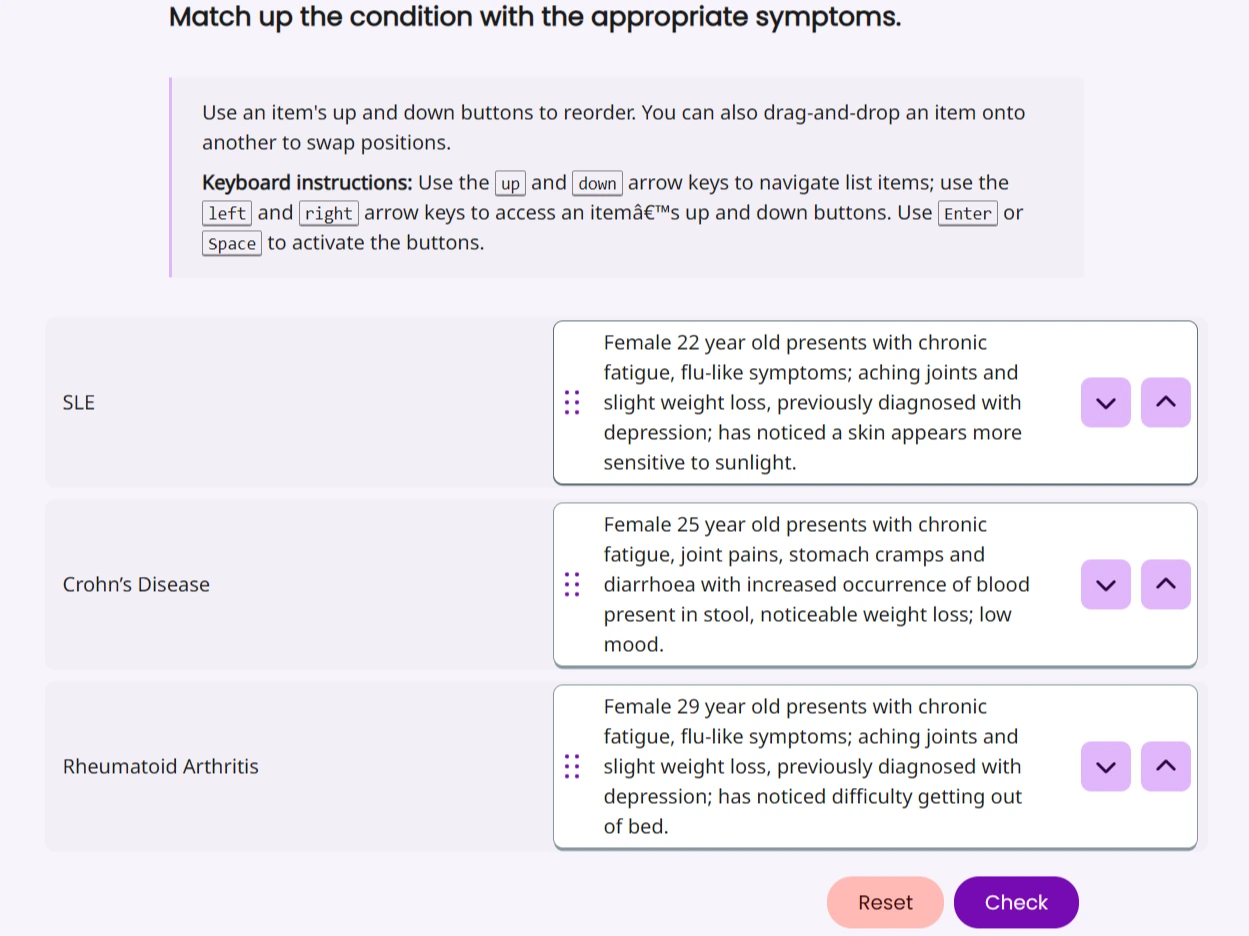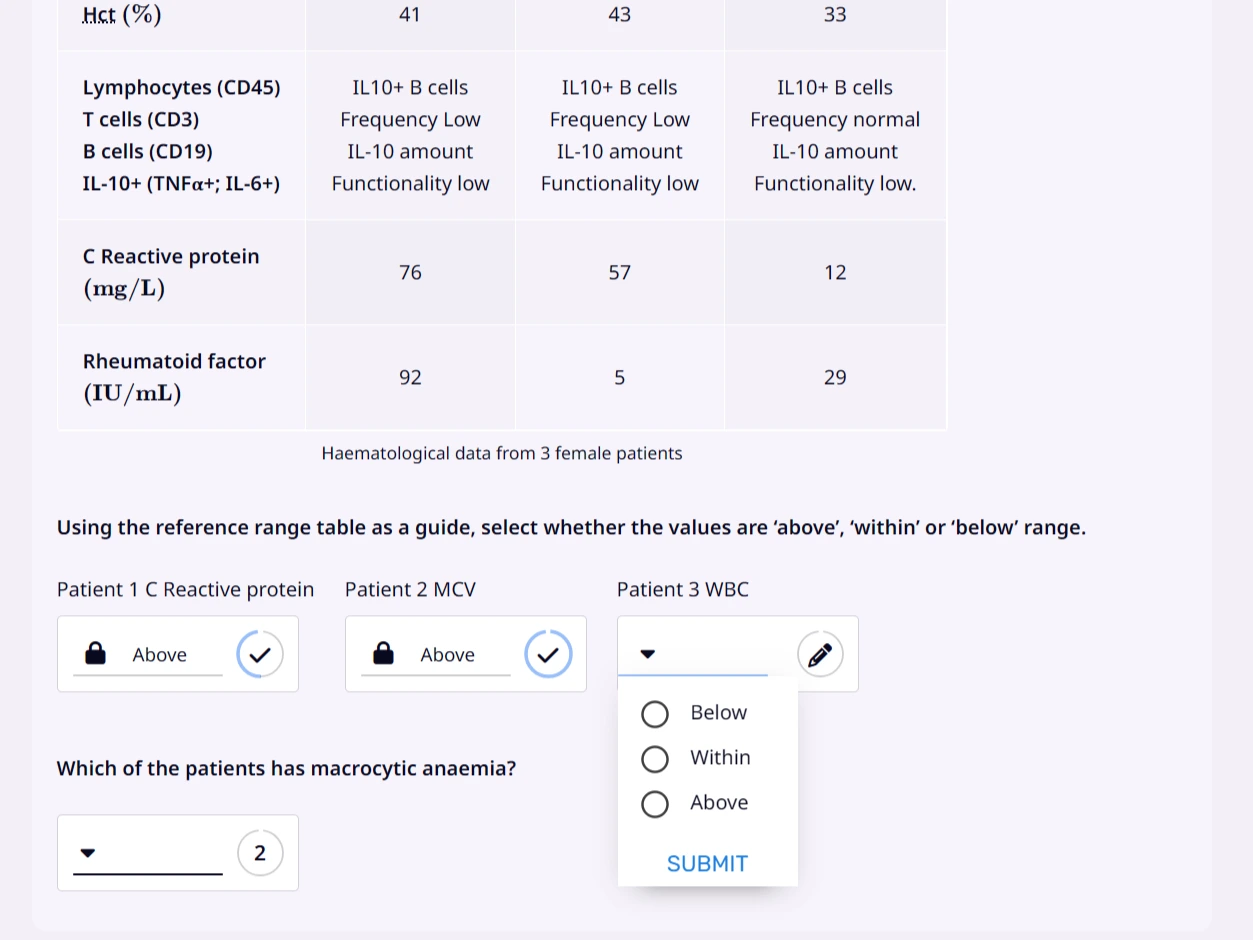
This sheet explores the complexity of autoimmune disease diagnosis with regard to the potential overlap of signs and symptoms, and how haematological and immunological data can help to generate patient profiles leading to diagnosis. This sheet also focuses on the generation and analysis of ELISA data to investigate patient serum IgG levels. Students are ultimately presented with a large panel of patient data to develop the skill of identifying trends in large data sets.
apply knowledge of immunology laboratory diagnostic processes to analyse and interpret haematological and immunological data.
construct an ELISA standard curve to analyse patient IgG serum concentrations.
analyse complex patient profile data to inform diagnosis.
No items found.
chevron_left
chevron_right
Skills
Concepts, Principles and Theories
How to use data from key diagnostic tests in conjunction with autoimmune disease symptoms and complex immunological and haematological patient profile data to inform diagnosis.
Interpreting and Analysing Data
How to interpret reference range data to inform the patient profiles.
Manipulating and Presenting Data
How to generate a standard curve and calculate serum immunoglobulin concentration.
How to use appropriate controls and apply the principles of reference ranges.
Our products integrate with all major learning platforms, including Canvas, Blackboard, Moodle, Sakai and Brightspace or without any LMS using our LearnSci Direct Platform.