< Back to the full list

Cytology

Cell culture: fundamentals

No items found.

Specify the roles of major cell culture media components and identify aseptic workflows required to prevent biological contamination. Calculate total cell concentration and percentage viability using trypan blue dye and a haemocytometer. Estimate cell confluency and execute core subculturing practices, including passaging, cryopreservation, and thawing procedures.

Learning outcomes

  • specify the role of major components of cell culture media.
  • identify the aseptic workflow essential for successful cell culture.
  • calculate the number of cells using a haemocytometer.
  • complete the key processes in cell culture, including passaging, freezing and thawing of cells.
No items found.
chevron_left
chevron_right

Skills

Manipulating and Presenting Data

  • Calculate percentage cell viability, total cell concentrations, and dilution factors from raw grid counts
  • Determine exact cell suspension and media volumes required to achieve target seeding densities for experimental plates

Obtaining and Recording Data

  • Collect counts of live and dead cells across designated haemocytometer quadrants using trypan blue dye exclusion
  • Document visual indicators of cell confluency, culture status, and experimental counts systematically

Using Instruments and Equipment

  • Operate biosafety cabinets correctly to maintain sterile technique and protect cell cultures from airborne pathogens
  • Utilise haemocytometers and optical microscopes to perform cell counts and assess cellular morphology

Interpreting and Analysing Data

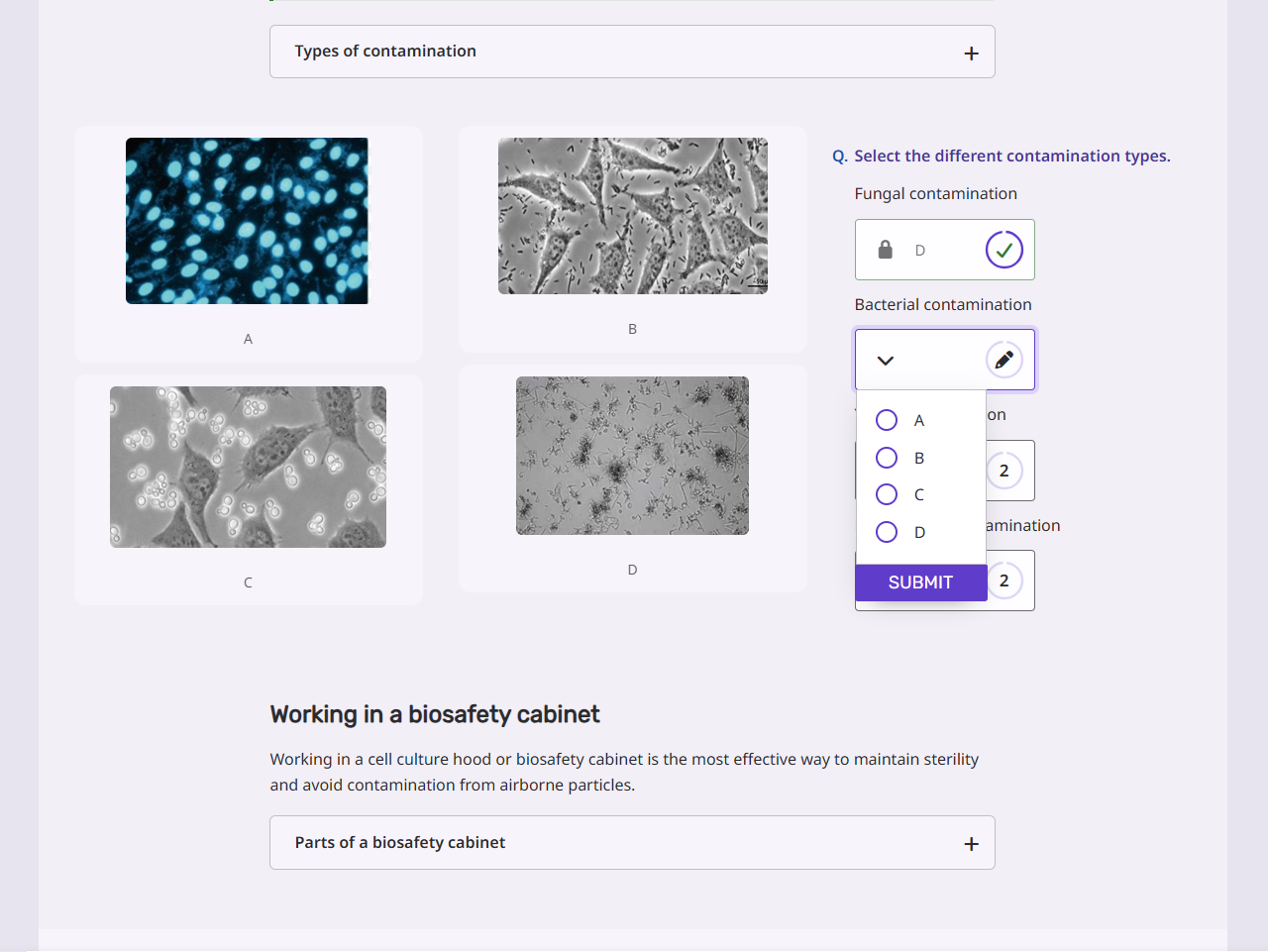
  • Evaluate changes in media color and microscopic imagery to estimate confluency and detect culture contamination
  • Analyse experimental variables to assess the impact of improper trypsinization or cryoprotectant exposure on cell health

Concepts, Principles and Theories

  • Identify the roles of essential cell culture media components and aseptic workflows required to prevent contamination
  • Apply biological principles to explain the mechanisms of trypsin dissociation, cell passaging, and cryopreservation
Learn more about our approach to skills
Balgisa, Pharmaceutical Sciences Student, London Metropolitan University

"I found using Smart Worksheets easy and clear. The lecturers helped us to understand how to work with them. They gave us a lot of examples and questions, so we practised a lot through our course. When the exam took place, we all were confident enough to pass this part of the exam."

Details

Degrees

Biological science
Biomedical science

Discipline

Tissue and cell biology

Topic

Cytology

Purchase option

The Smart Worksheet Library

Related products

What are LabSims?

Our virtual lab simulations enhance student learning by building confidence in practical skills.
  • Enhance student skills and accelerate learning with multiple opportunities to practise
  • Boost confidence and competency with enhanced support and personalised feedback
  • Engage and motivate with enjoyable, challenging learning experiences
LabSim product page

What are Smart Worksheets?

Online, autograded assessment tool for advanced data analysis and calculation practice
  • Improve the student experience of assessment with immediate, targeted feedback
  • Save academic time by minimising repetitive marking for staff
  • Gain immediate insight into student progress with individual performance data
Smart Worksheets product page

Integrate with your LMS

Our products integrate with all major learning platforms, including Canvas, Blackboard, Moodle, Sakai and Brightspace or without any LMS using our LearnSci Direct Platform.
Learn more about LearnSci Direct.
No items found.

See how our resources can enhance your student experiences

  • Try our resources for free
  • Get a live demonstration of our products
  • Become a partner and join our community
  • Talk to our team of experts
Request a demo
Image of a smiling student with a microscope